
Have you ever seen an online course advertised with ‘limited places available’?
‘Only 12 spots! Just 2 remaining! Doors closing soon. Final chance. Final final chance.’
Really? It’s a pre-recorded programme with six videos and a couple of downloads, what exactly is ‘limited’?
Scarcity can work - when it’s real.
When it’s fake, it isn’t scarcity, it’s BS.
And customers know.
They may still buy. They may even like what you’re selling. But a little trust has eroded before they’ve started.
It happens everywhere.
A restaurant says, ‘We’ve just run out of the sea bass.’ But they haven’t had the bass for three days.
Why not just say, ‘Sorry, we’re still waiting for our fish delivery. We should have taken that off the menu.’
You’d respect that.
Or the classic, ‘Your email went into my junk folder.’
Maybe it did… or… maybe they just didn’t respond!
Why not say, ‘Sorry, I haven’t replied. That’s my fault. I’ll do it now.’
Lovely.
Or the courier who says, ‘We tried to deliver, you weren’t in.’ Yet your door cam shows you haven’t had a visitor all day.
How about saying, ‘Deliveries are behind at the moment, but we’re doing everything we can to get it to you.’
Not perfect. But honest.
Honest beats impressive.
This is where businesses, and people, get themselves in a knot.
They try to sound professional.
Instead of the truth, we get fog.
‘Due to circumstances beyond our control…’ – fog ‘We’re currently experiencing operational challenges…’ – fog
‘Because of unprecedented demand…’ – fog!
‘There appears to have been a system error…’ – fog, FOG, FOG!!
Most customers don’t need perfection.
They can cope with a delay.
They can cope with a mistake.
They can cope with something being unavailable.
What they struggle with is being treated like they won’t notice.
Like fake deadlines and hidden charges.
The cancellation button that’s hidden better than the Sellotape at Christmas.
The apology that apologises for ‘any inconvenience caused’ but never apologises for what actually happened.
These things don’t make an organisation look clever. They make the customer feel played.
Customers love to buy. Can bear being sold to. But they hate being played.
Something to consider: Am I treating my customer like they’re smart?
You can trick someone into buying.
But you can’t trick them into trusting.
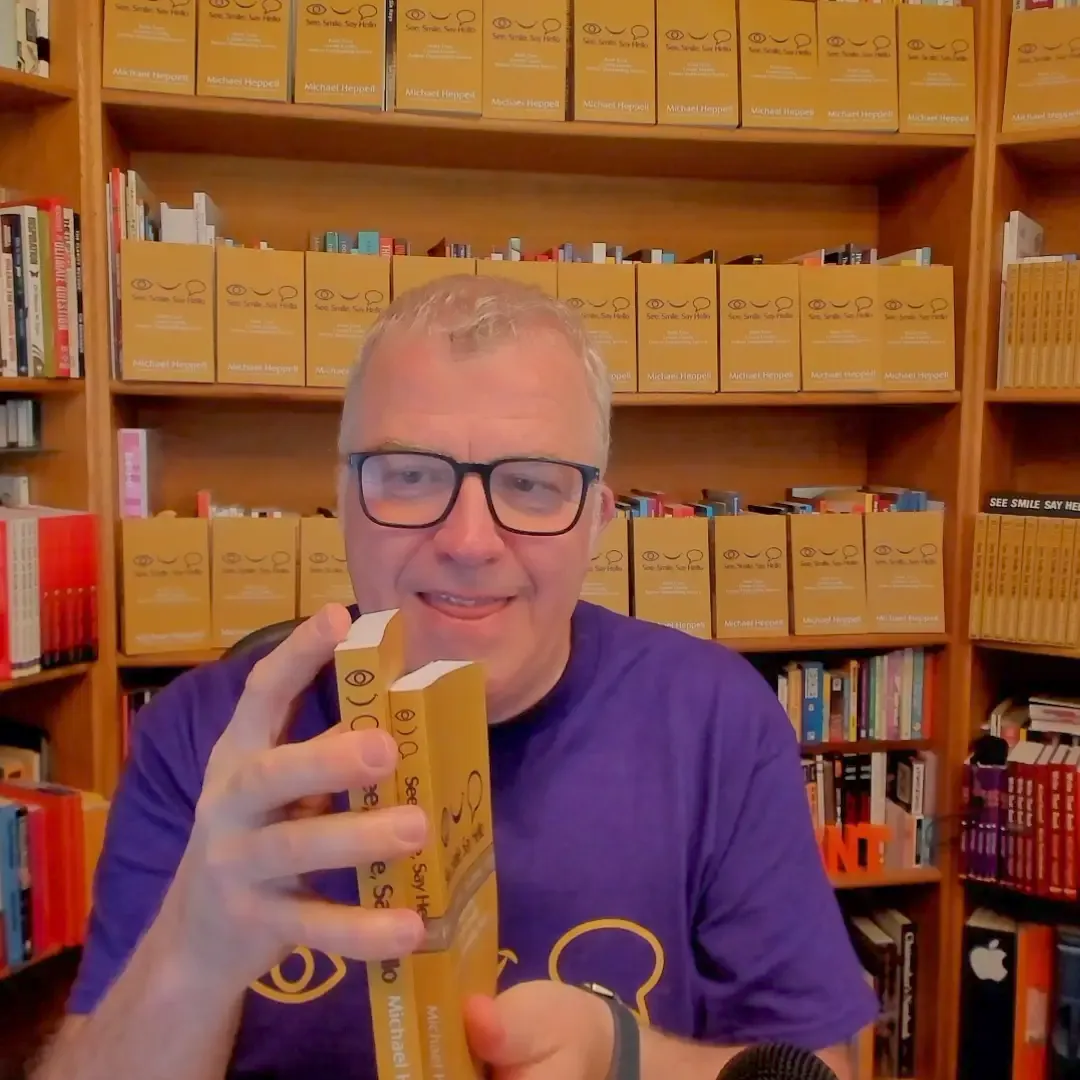
What do hate being played? Let me know and I’ll send a copy of my newest customer service book See, Smile, Say Hello to our favourite.
Be Brilliant!
Michael
PS For the avoidance of doubt, I think your customer is everyone who isn’t you.

Comments